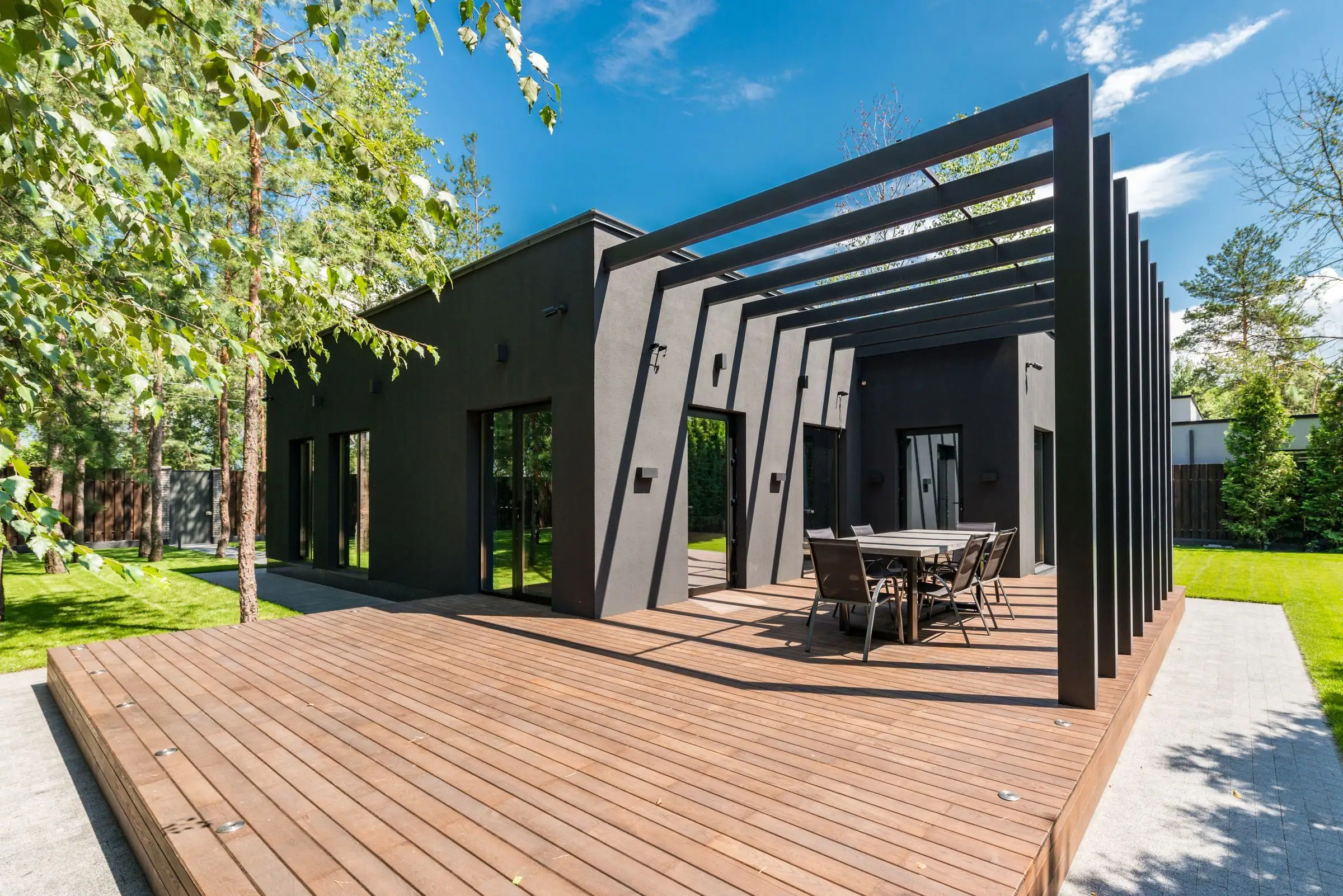
Freestanding Patio Covers
Freestanding patio covers in Buckeye
Shade where the house is not: over a pool deck, a fire pit or a seating spot out in the yard. A matched local installer plans the posts and footings.
Shade where the house is not
A freestanding patio cover stands on its own posts, with no tie to the house wall, so it can shade a spot that is away from the back door. That freedom is the main reason to choose a freestanding cover. It can sit over a pool deck, a fire pit area, an outdoor kitchen away from the house, or a garden seating area that gets the best breeze or the best view. A matched local installer can quote a freestanding cover in aluminum, in an Alumawood style finish, or in a solid insulated panel, with lattice or solid roof options.
A freestanding cover needs posts on all sides and footings that suit the soil, the span, and the wind load for that site. That footing work is the main reason a freestanding cover usually costs more than an attached cover of the same size, and one published guide puts that difference at about $1,500 to $4,000. The footing plan should be listed in the written quote, along with the post sizes, the beam layout, and the roof style, so a homeowner can compare quotes fairly.
Placement is the most important decision for a freestanding cover. A cover over a pool deck needs to respect pool gates, deck drains, and walkways, while a cover over a fire pit area needs clearance and airflow for the fire feature. A cover in a garden needs to respect trees, irrigation lines, and any easements. A homeowner should walk the yard with the installer and talk about furniture, walkways, and views, because post placement is hard to change after footings are set.
Roof, drainage, and use
A freestanding cover can use a lattice roof for filtered shade or a solid roof for full shade and rain protection. A lattice roof keeps the space bright and lets air move, while a solid roof keeps a dining table or an outdoor kitchen dry in a storm. A solid freestanding roof needs a gutter and downspout plan, just like an attached solid roof, and the water must land where it does not flood a walkway or a pool deck. A homeowner should ask where downspouts will land and whether a drain line is included.
A freestanding cover can also define a yard without changing the house. It creates a destination in the yard, a place to gather that is separate from the back door, and it can frame a view or a garden. That destination effect is useful on a larger lot, where a patio next to the house may not be the best spot for shade. A homeowner with a larger Buckeye lot should consider where people actually gather in the yard, rather than assuming the best spot is next to the house.
Upkeep follows the material, not the freestanding form. Aluminum and Alumawood style covers need a wash with soap and water, while wood needs regular sealing in desert sun. A freestanding cover in an open yard may collect more dust than a cover next to the house, so a simple wash schedule helps keep the finish clean. A homeowner should ask about the finish and the care instructions for the chosen material, and should view color samples in full sun.
Ask the installer about
- Placement and sun direction
- Posts on every side
- Footings, span and wind load
- Lattice or solid roof
- Gutters for a solid roof
- Pool gates, walkways and easements
- Permit for the town
- HOA approval
Buckeye Patio Covers is a referral service, not a contractor. Work is done by independent, licensed local contractors.
Back to Buckeye Patio Covers home or see all services.
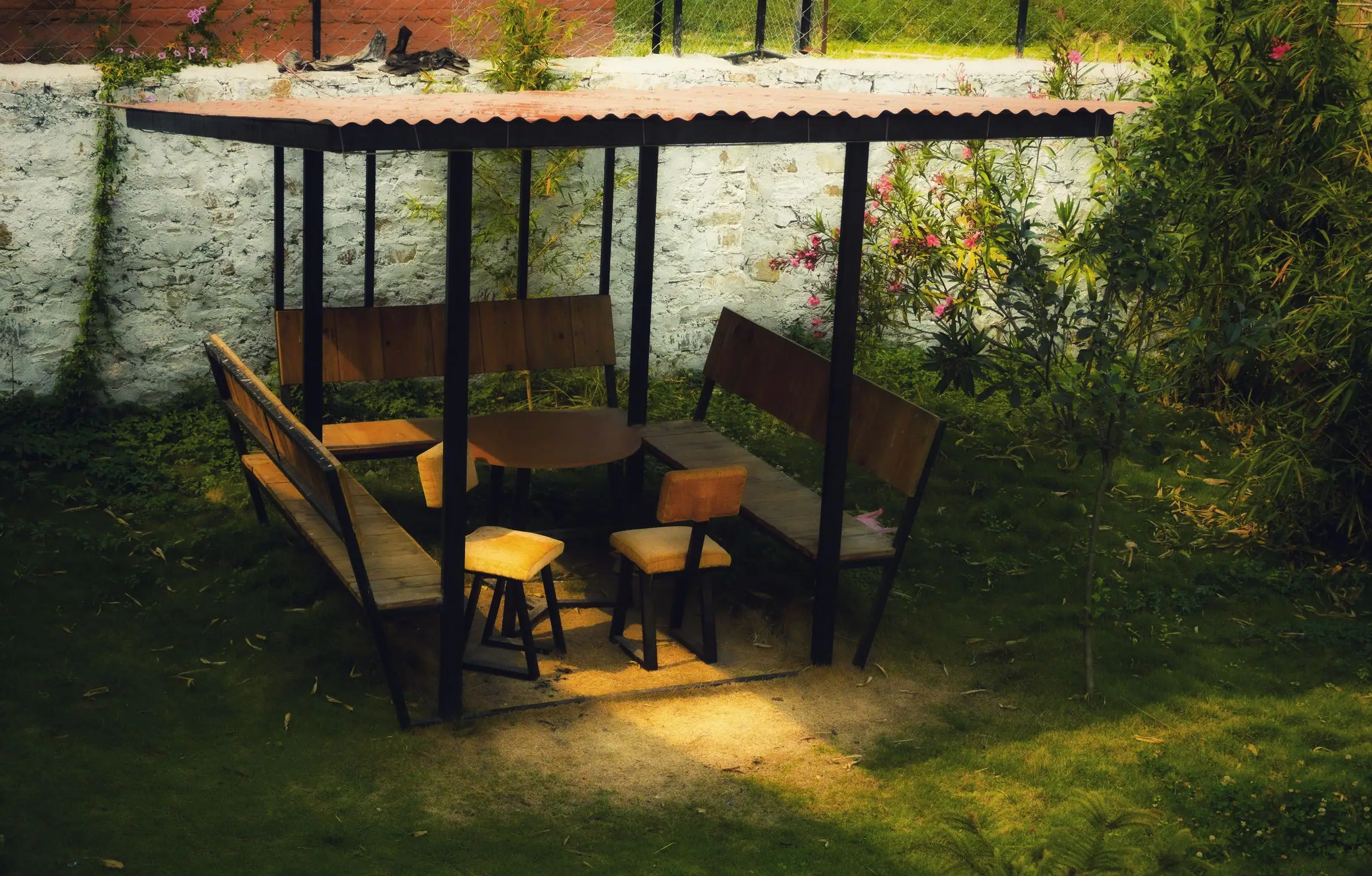
Freestanding shade canopy over benches and a table in a garden
Ideas
Freestanding Patio Covers ideas
Stock photos for ideas only, not jobs by a matched installer.
Questions
Freestanding Patio Covers questions
Why choose a freestanding cover?
A freestanding cover can shade a pool deck, a fire pit area, or a garden seating area away from the house, where an attached cover cannot reach. It also creates a destination in a larger yard.
Does a freestanding cover cost more than an attached cover?
Usually yes, because it needs extra posts and footings. One published guide puts that difference at about $1,500 to $4,000 for the same roof size.
Does a freestanding solid cover need gutters?
Yes. A solid roof collects rain, so it needs a slope, a gutter, and a downspout plan that keeps water off walkways and pool decks.
Where should a freestanding cover be placed?
Where people gather, with respect for pool gates, walkways, trees, irrigation lines, and easements. A walkthrough with the installer helps set post placement before footings are set.
Does a freestanding cover need a permit?
Permit rules vary by town, size, and roof type. A homeowner should ask the matched installer about the permit path for that town and confirm community rules before work starts.
More covers
Other covers we match
Thinking about freestanding patio covers? Get matched.
Free match, no obligation. A licensed local installer visits, measures and sends a written quote.