Lattice Shade Covers
Lattice shade covers in Buckeye
Filtered shade with airflow, for a patio that should stay bright. Ask the matched installer how much shade the slat spacing gives at midday.
Filtered shade that keeps a patio bright
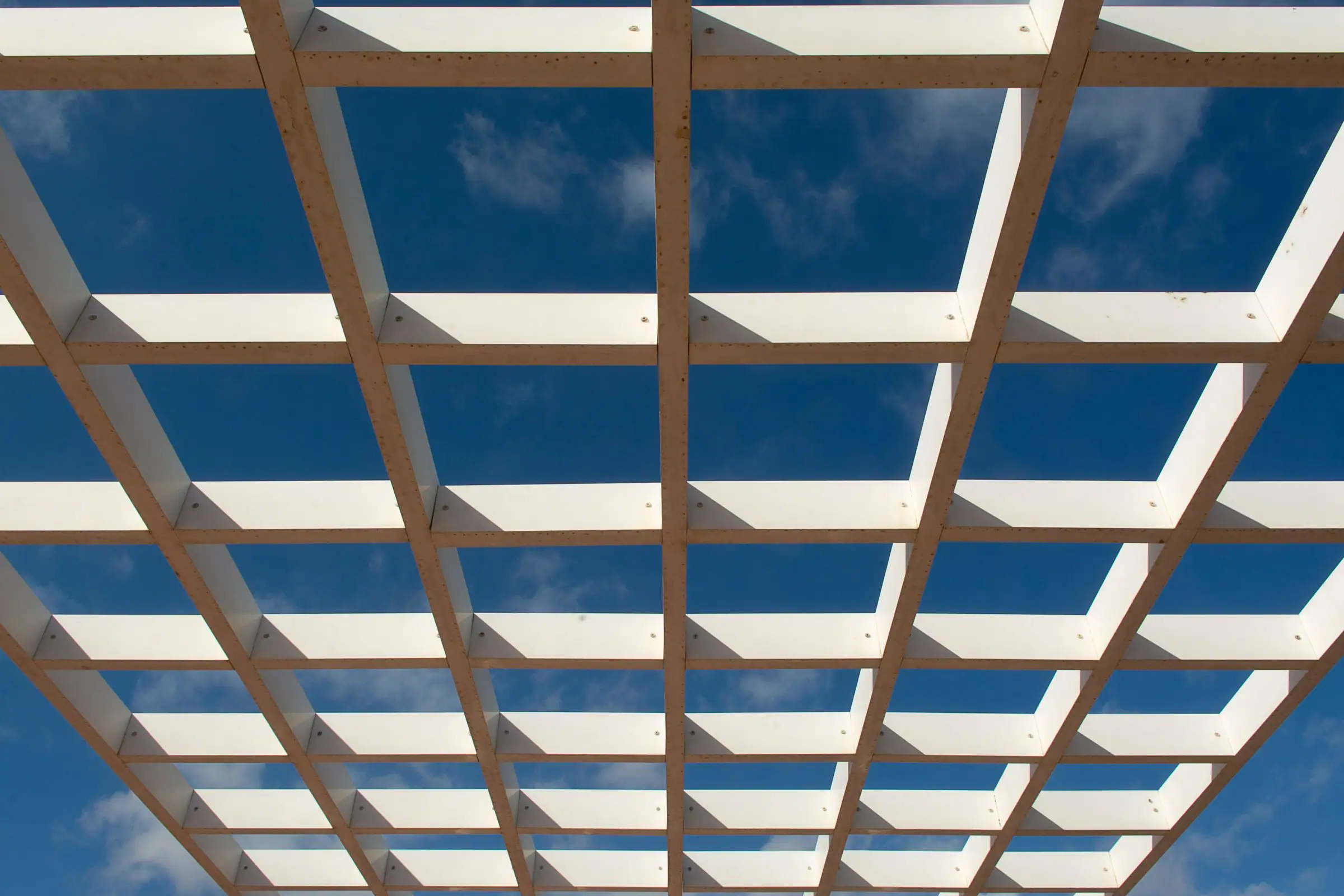
A lattice shade cover uses spaced slats over posts and beams, so sunlight comes through in strips and air moves freely underneath. The result is filtered shade, not full shade, and a patio that stays bright while direct sun is cut. That balance suits a garden seating area, a play area, or a patio where the homeowner wants light in winter and relief from sun in summer. A matched local installer can quote a lattice cover in aluminum, in an Alumawood style finish, or in wood, and the slat spacing sets how much shade the cover gives.
Slat spacing is the key detail. Closer slats give more shade and less light, while wider slats give more light and less shade. A common layout gives about half shade at midday, but the exact shade changes through the day as the sun moves. A homeowner who wants a cooler patio should ask about closer slats, and a homeowner who wants a bright patio should ask about wider slats. The installer can explain the shade pattern for a south facing patio versus a west facing patio, because the sun angle changes the result.
A lattice cover does not keep rain off a patio, because rain passes through the slats. That trade should be clear before ordering. A lattice cover over a dining table will not keep the table dry in a summer storm, while a solid cover will. Some homeowners solve that split by putting a solid cover over a dining area and a lattice cover over a garden area, and that combination can give both benefits without covering the whole yard in solid roof.
Materials and upkeep for lattice covers
Aluminum lattice is popular in Buckeye because it needs little upkeep and resists rust. An Alumawood style lattice gives the same low upkeep with a wood grain finish. Wood lattice gives a warm, natural look and a heavier feel, but it needs regular sealing in desert sun, and that upkeep should be part of the budget. A homeowner who chooses wood should ask about the sealing schedule and the cost of that upkeep over time, because a wood lattice that is not sealed will weather faster in the desert.
A lattice cover can be attached to the house or freestanding. An attached lattice ties to the house wall and uses posts on the outer side, while a freestanding lattice needs posts on all sides and a footing plan for the soil and span. A lattice cover over an existing slab is simpler than a cover that needs new footings, and the installer can confirm the footing plan at a visit. Post placement should be walked through on site, because posts affect furniture, walkways, and views.
A lattice cover is also a good base for shade cloth, hanging lights, or climbing plants, where the community rules and the structure allow. Shade cloth can add shade without changing the structure, and lights can make the patio usable in the evening. A homeowner should ask whether the beam layout supports those additions, and should get any electrical work priced in the quote. A lattice cover that is planned with those uses in mind will serve the patio better than a cover ordered for shade alone.
Ask the installer about
- Slat spacing and direction
- Aluminum or wood
- Attached or freestanding
- Shade at midday and late afternoon
- Room for shade cloth or lights
- Post and footing plan
- Upkeep and sealing for wood
- HOA approval
Buckeye Patio Covers is a referral service, not a contractor. Work is done by independent, licensed local contractors.
Back to Buckeye Patio Covers home or see all services.
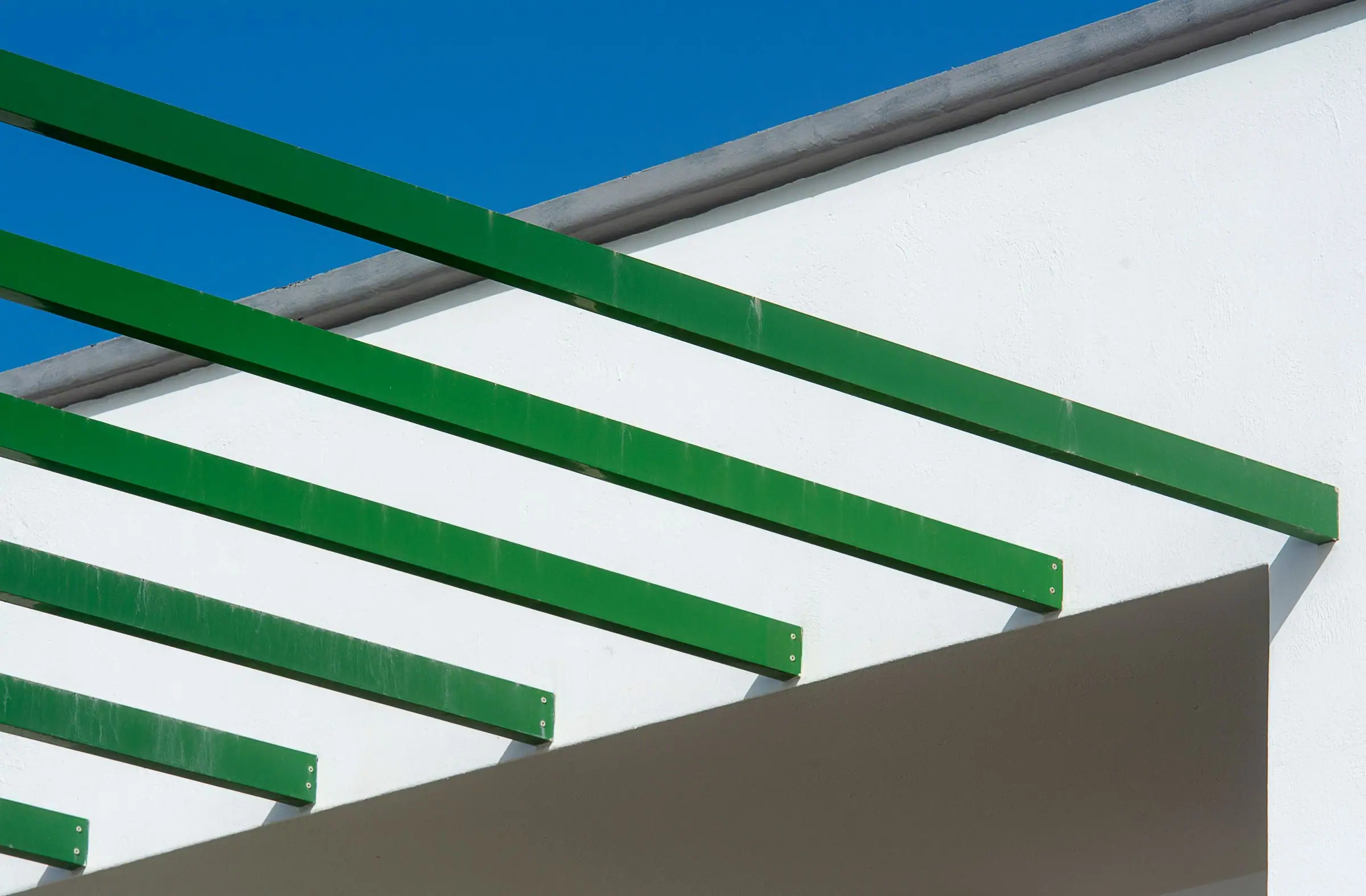
Green pergola beams against a clear blue sky
Ideas
Lattice Shade Covers ideas
Stock photos for ideas only, not jobs by a matched installer.
Questions
Lattice Shade Covers questions
How much shade does a lattice cover give?
It depends on slat spacing and sun angle. A common layout gives about half shade at midday, with more shade from closer slats and more light from wider slats. The installer can explain the pattern for that patio direction.
Does a lattice cover keep rain off?
No. Rain passes through the spaced slats, so a lattice cover is for shade and airflow, not rain protection. A solid cover is the choice when rain protection is the goal.
Is aluminum or wood better for a lattice cover?
Aluminum needs less upkeep and resists rust, while wood gives a warmer look but needs regular sealing in desert sun. The choice is a trade between look and upkeep, and the quote should name the material.
Can a lattice cover be freestanding?
Yes. A freestanding lattice needs extra posts and footings, and the cost difference over an attached cover should be listed in the written quote.
What should I ask about slat spacing?
Ask how much shade the spacing gives at midday on a south facing patio and on a west facing patio, and ask to see a sample or a photo of a similar spacing in full sun.
More covers
Other covers we match
Thinking about lattice shade covers? Get matched.
Free match, no obligation. A licensed local installer visits, measures and sends a written quote.